
AnyRidge®Our choice.
Your foundation.
A beautiful restoration starts beneath the surface. At Icónica Dental Group, we exclusively use the MegaGen AnyRidge® implant system.
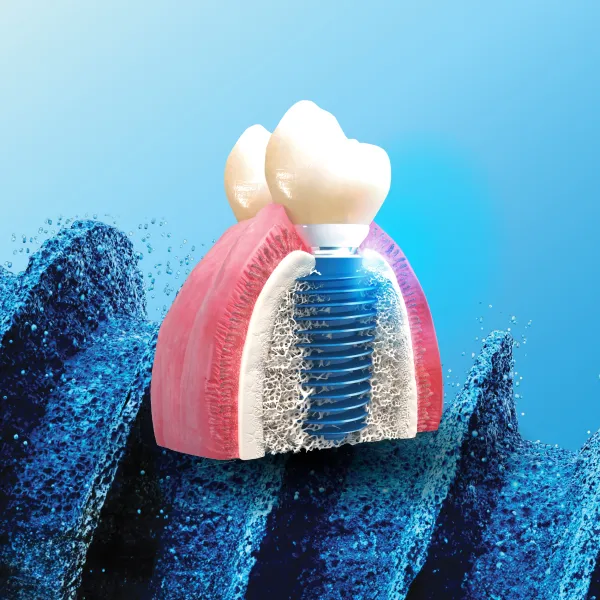
Purposeful design.
Personalized care.
An implant acts as a replacement tooth root. The restoration above it—such as a crown, bridge, or denture—is designed around your needs.
We pair our choice of AnyRidge with an individual assessment of your oral health, bone, bite, and restoration goals. The system is one part of the plan; careful treatment and ongoing maintenance matter too.
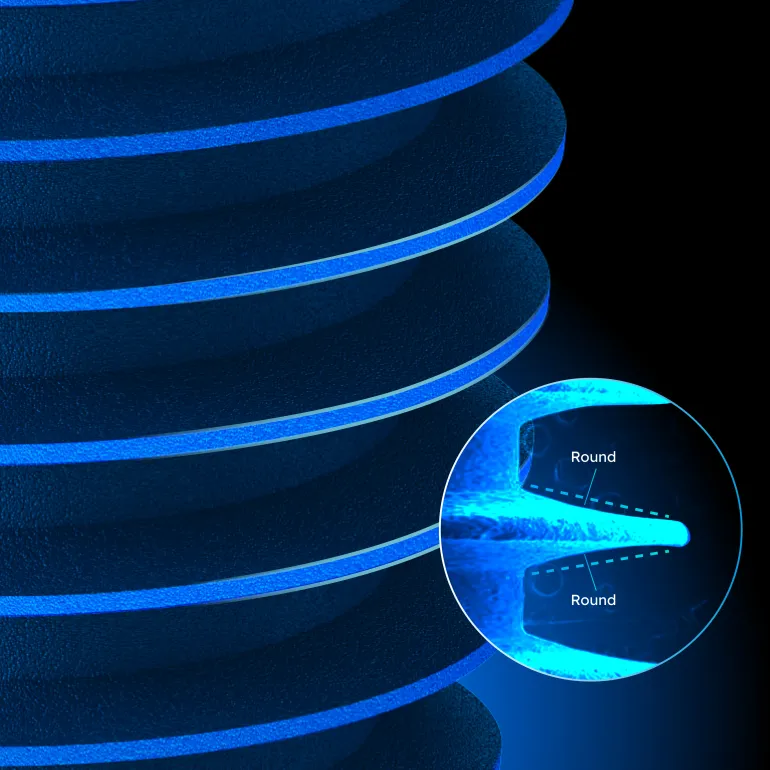
KnifeThread®
A distinctive thread geometry designed to engage bone and support initial implant stability.

XPEED® surface
A calcium-ion-treated surface designed to support the process of bone integrating with the implant.
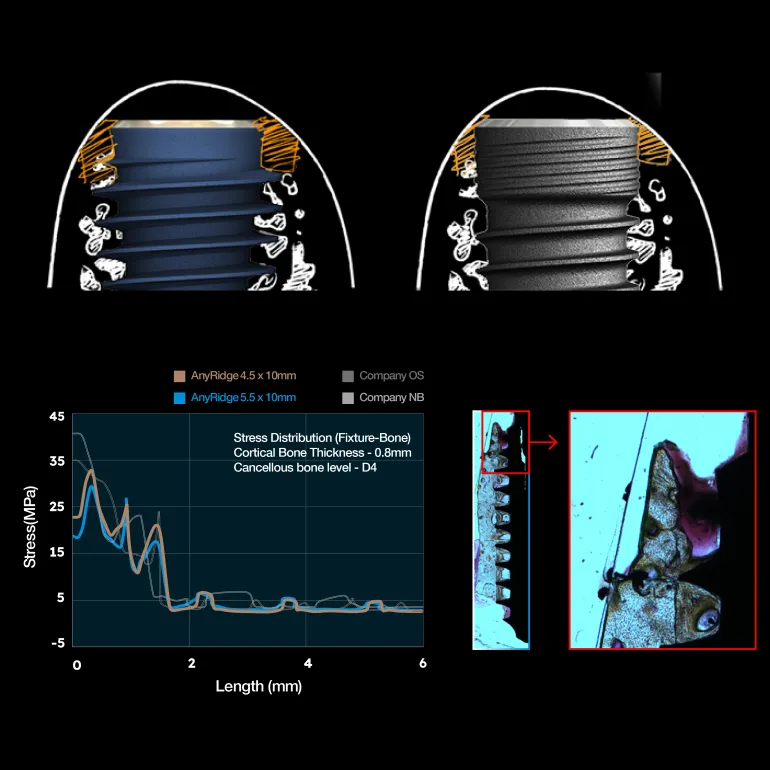
Bone-conscious design
The implant’s upper geometry is designed to reduce stress on cortical bone.
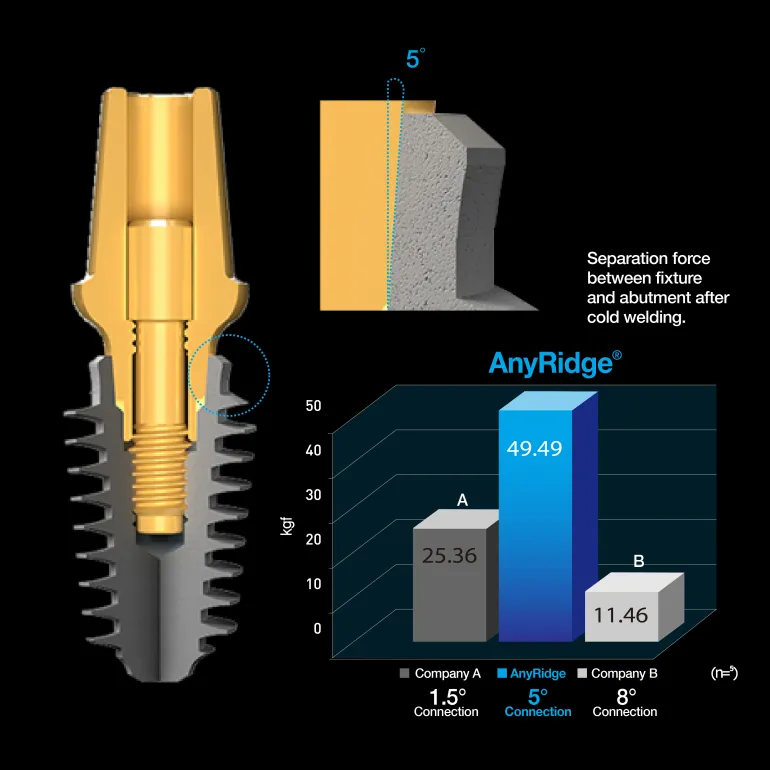
5° Morse taper
A tapered internal connection joins the implant to the component that supports your restoration.
KnifeThread® design
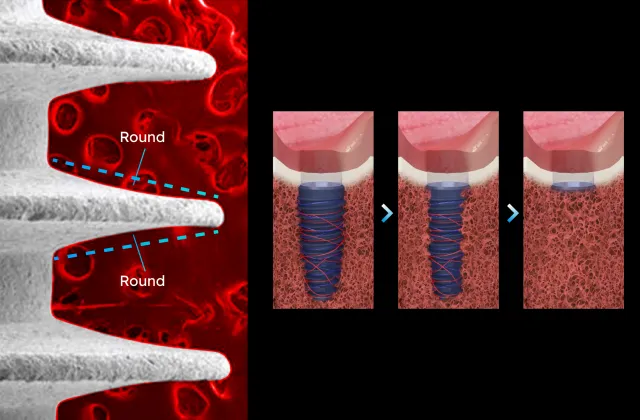
Initial stability
The threads are designed to engage bone at placement. Your dentist assesses stability before deciding when to restore the implant.
Manufacturer illustration of design; individual clinical results vary.
Space between threads
The thread design leaves spaces intended to support the surrounding healing tissue.
Manufacturer illustration of design; individual clinical results vary.
XPEED® surface technology

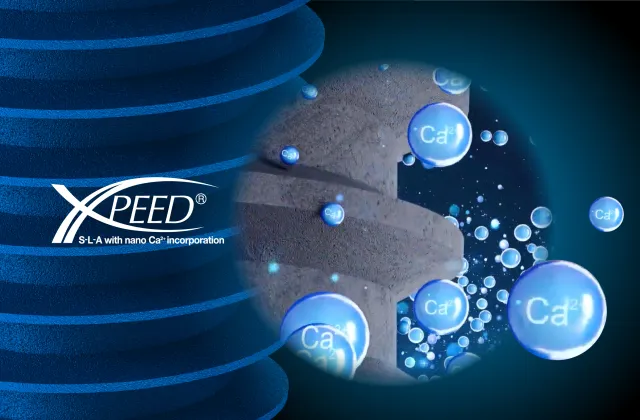
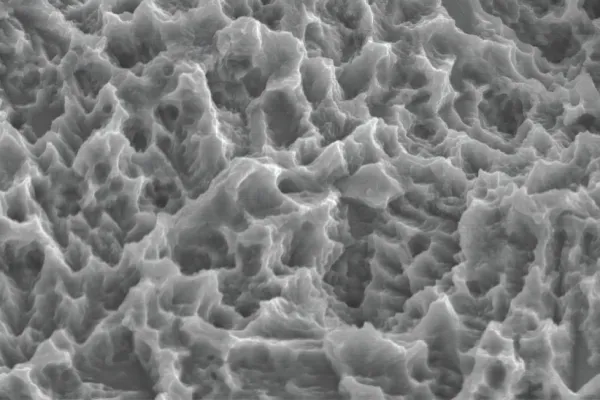
Calcium-treated surface
Calcium ions are incorporated into the implant surface.
Manufacturer illustration of design; individual clinical results vary.
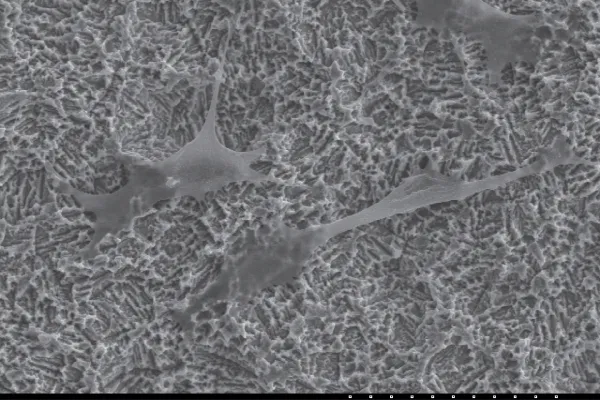
Bone integration
Osseointegration means bone forming a connection with the implant. Healing time varies.
Manufacturer illustration of design; individual clinical results vary.
Distinctive blue surface
The blue appearance is associated with MegaGen’s XPEED surface treatment.
Manufacturer illustration of design; individual clinical results vary.
Designed with bone in mind
Upper implant geometry
The coronal design is intended to reduce stress on cortical bone.
Manufacturer illustration of design; individual clinical results vary.
Restoration planning
We plan the implant and visible teeth together around your bite, gum position, and goals.
Manufacturer illustration of design; individual clinical results vary.
5° Morse taper connection
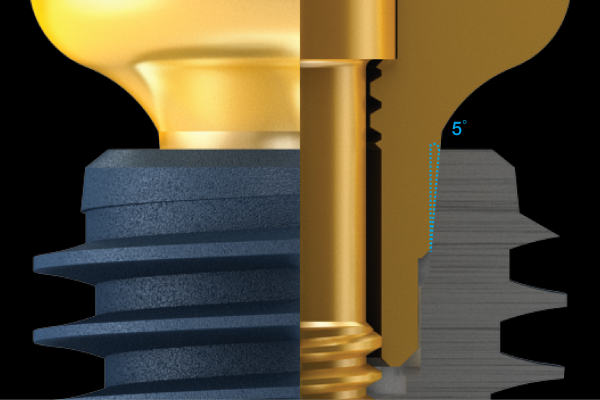
Tapered fit
A tapered internal joint connects the implant and abutment.
Manufacturer illustration of design; individual clinical results vary.
Restoration support
The abutment supports the restoration. Correct assembly and maintenance remain essential.
Manufacturer illustration of design; individual clinical results vary.
The technology.
The plan.
The person.
Your care begins with a conversation about what you want to restore: comfort, function, confidence, or all three.
Our team explains the recommended steps, alternatives, and timing before treatment begins.
Understand your starting point
We evaluate your teeth, gums, available bone, and relevant health history.
Plan your restoration
Implant selection and placement are coordinated with the teeth we intend to restore.
Protect your investment in care
Follow-up visits, professional maintenance, and daily hygiene help support your implant restoration over time.
Three ways to restore
a full smile.
Select an option to see how it works. For implant treatment, Icónica exclusively uses MegaGen AnyRidge®.
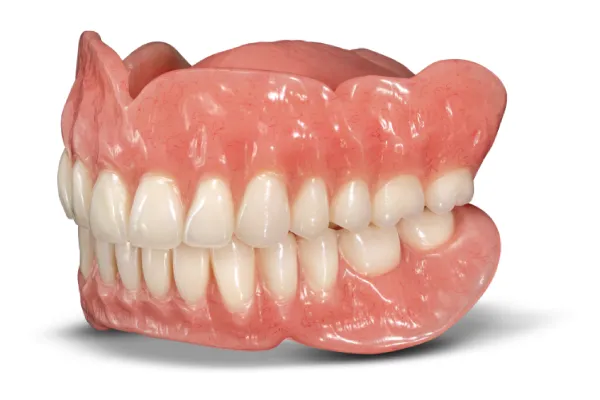
Removable dentures
A full set of replacement teeth that you take out for cleaning. Conventional dentures rest on the gums and do not use implants. They are one option to discuss when replacing an entire arch.
Discuss denture options ↗Illustration for education; your treatment is planned individually.
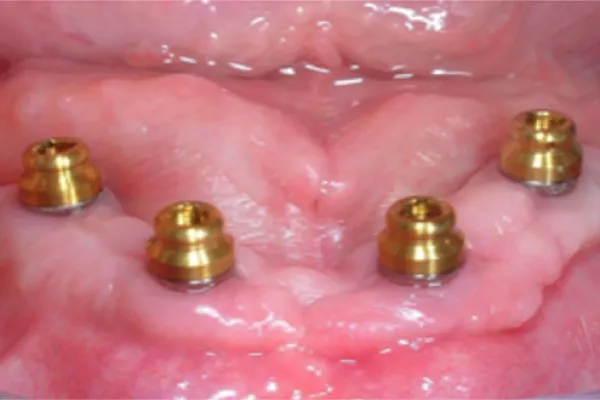
Implant-supported dentures
A denture supported or retained by implants. Many designs can be removed by the patient for cleaning. Your dentist explains the attachment system, expected support, and maintenance before treatment.
Explore implant-supported dentures ↗Illustration for education; your treatment is planned individually.
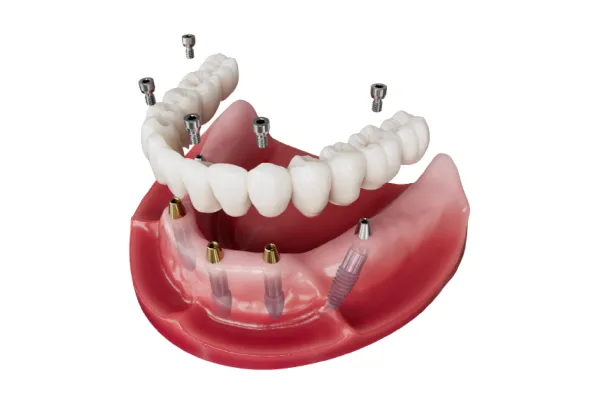
Fixed teeth · All-on-X
A full arch of replacement teeth secured to multiple implants. The restoration stays in place during daily use and is removed by your dental team when needed. Implant number, bone preparation, and timing depend on your evaluation.
Explore All-on-X ↗Illustration for education; your treatment is planned individually.
What we assess.
Why it matters.
Explore the factors that help us build your individual treatment plan.
Available bone
We assess the height, width, and condition of the bone where implants would be placed. This helps determine implant position and whether grafting or other preparation may be needed.
Illustration for education; your treatment is planned individually.
Bone density
Bone varies in firmness. This can influence how we prepare the site, select the implant, and plan healing before the restoration is placed.
Illustration for education; your treatment is planned individually.
Your complete evaluation
Your gums, bite, health history, and restoration goals all contribute to the plan. Bone loss does not automatically rule out implant treatment, but it may change the recommended approach.
Illustration for education; your treatment is planned individually.
Understand every step.
From 3D CBCT-guided planning to local anesthesia and long-term care, explore what to expect.
Evaluation & Candidacy
Am I a candidate if I’ve been missing a tooth for years?
Possibly. Bone can change after a tooth is lost, but the time elapsed does not decide candidacy by itself. 3D CBCT-guided planning helps us assess available bone and nearby anatomy and discuss whether grafting is needed.
What if I have existing gum disease or periodontal issues?
Active gum disease and infection need assessment and treatment before implant placement. We review your gum health and establish a maintenance plan to help protect the tissues around your future implant.
Can I get dental implants if I have medical conditions like diabetes or osteoporosis?
These conditions do not automatically rule out treatment. We review disease control, healing risks, and medications, including osteoporosis medicines that can affect jawbone healing. Coordination with your physician may be needed; do not stop prescribed medication on your own.
Is there an upper age limit for dental implants?
There is no universal upper age limit. Your overall health, jawbone, ability to heal, and ability to maintain the restoration are more relevant than age alone. We assess these factors individually.
Can smokers get dental implants?
Some smokers may qualify, but smoking raises the risk of impaired healing and implant complications. Tell us about tobacco, vaping, and nicotine use so we can discuss cessation support and how it affects your plan.
The Procedure & Healing
Does the implant surgery hurt, and what anesthesia is used?
Local anesthesia numbs the treatment area. We review your health and medications, choose the anesthetic, and check numbness before starting. You may feel pressure or vibration; tell us if you feel pain so we can pause and adjust. Postoperative soreness and swelling are discussed beforehand.
What is the difference between a dental implant, an abutment, and a crown?
The implant is the component placed in the jawbone. The abutment connects it to the restoration. The crown is the visible replacement tooth. Your proposal identifies the components and stages included in your care.
What is the difference between a single implant and a bridge or partial denture?
An implant crown is supported by an implant. A traditional bridge usually relies on adjacent teeth, which may need reshaping. A removable partial denture replaces teeth with a removable appliance. We compare each option’s treatment, cleaning, and cost requirements.
What happens if I need an extraction and an implant at the same time?
An implant can sometimes be placed at the extraction visit. In other cases, the site needs time to heal or grafting first. Examination and 3D CBCT planning help assess the socket, available bone, and anatomy. Immediate placement does not automatically mean immediate final teeth.
How long is the actual surgical appointment?
The length depends on the number of implants, extractions, grafting, and case complexity. Your scheduled appointment also includes preparation, anesthesia, and postoperative instructions. We provide an estimate for your specific procedure before the visit.
How much time off work will I need after surgery?
Plan time to rest after surgery. Return to work depends on the extent of treatment, your recovery, and whether your job involves physical activity. We give you individualized activity instructions and discuss your work schedule in advance.
What can I eat during the healing phase?
Follow the soft-food instructions provided for your procedure. Avoid hard or crunchy foods and pressure on the surgical area while it heals. The duration of restrictions depends on the surgery and whether a temporary restoration is fitted.
Will I ever be left without visible teeth during the healing process?
Temporary options may be available, especially for visible front teeth. These can include a removable temporary tooth or another provisional restoration. We discuss the appropriate option before surgery; a fixed temporary tooth is not possible in every case.
How long does osseointegration take before final teeth are placed?
Osseointegration is the process of bone integrating with the implant. It generally takes several months. Timing depends on the site, stability, health, and any grafting. We assess healing before placing the final restoration; a temporary tooth does not mean healing is complete.
Care & Longevity
How do I clean and maintain my dental implant once completed?
Brush daily and clean between and around the restoration using the tools your team recommends. These may include floss, interdental brushes, or a water flosser. Follow separate instructions during early healing and attend the professional maintenance visits recommended for you.
¿Cuánto duran los implantes dentales?
Implants are intended for long-term use, but a lifetime result cannot be guaranteed. The crown or other restoration may need repair or replacement over time. Oral hygiene, maintenance, bite forces, and health factors influence longevity.
Can dental implants fail or be rejected by the body?
Failure is possible. An implant may not integrate with bone or may develop complications later, including inflammation and bone loss around it. This is different from transplant rejection. We discuss your risks and evaluate symptoms such as looseness, swelling, or persistent pain.
Can I have an allergic reaction to titanium?
Titanium is widely used in implant treatment, but suspected material sensitivity needs individual evaluation. Tell us about previous metal reactions and any testing. We use MegaGen AnyRidge exclusively and will discuss whether our system is appropriate for your situation.
How much do dental implants cost, and what factors determine the price?
Your estimate depends on the number of implants, imaging, extractions, grafting, abutments, and the type and material of the final restoration. We provide an itemized treatment proposal so you can understand the stages and total planned cost.
Does dental insurance cover implants, and are payment plans available?
Coverage varies by policy; some plans contribute to selected treatment stages and others exclude implants. We can help review your benefits and discuss available financing options. Any approval, interest, or repayment terms are determined by the financing provider.
Discover your next
step toward a restored smile.
Visit Icónica Dental Group in Hallandale Beach to discuss your goals and learn whether implant treatment is right for you.