Your experience
We learn what you were told, what feels difficult with your current lower denture, and what outcome matters to you.
MegaGen MiNi™ overdentures · Hallandale Beach
A previous “no” may be worth a second look. At Icónica Dental Group, we can evaluate whether a MegaGen MiNi™ overdenture approach belongs among your options—based on your jaw anatomy, oral health, medical history, and goals.
A second opinion can clarify options; it does not guarantee eligibility, avoid a graft, or promise a particular result.
A diagnosis is a starting point
The lower jaw can change after teeth are lost, and a loose complete denture can make eating and speaking frustrating. If you were told there is not enough bone for a lower implant-retained denture, a focused re-evaluation may help explain why—and whether another approach is reasonable.
MegaGen describes MiNi™ as a small-diameter implant system for narrow-ridge situations and lists an overdenture configuration. That makes it a product option to discuss, not a treatment recommendation for every patient.
Mini implants still need suitable bone, healthy tissues, a workable bite, and a denture plan. Some patients may still need grafting or a different solution.
A closer look at the system
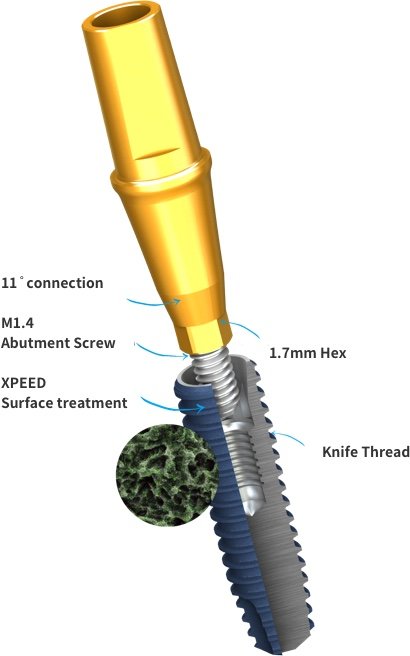
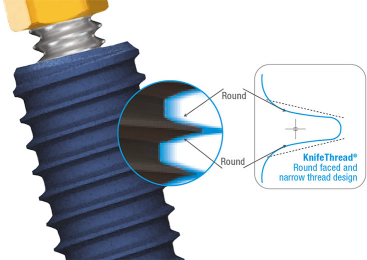
MegaGen highlights its KnifeThread® design and describes it as intended to support initial stability in compromised bone situations. The manufacturer’s design claims do not establish whether an implant is safe or suitable in your individual jaw.
Our role is to look at the complete picture: bone width and height, bone quality, implant positioning, your bite, the condition of your denture, hygiene access, and relevant health factors.
\nMegaGen also describes an overdenture configuration with a one-step insertion concept and an Xpeed® surface coating. These are manufacturer descriptions of product design; they do not predict how long your procedure may take or how your body will heal.
The deciding question is not simply “Can a smaller implant fit?” It is whether the overall plan is appropriate for you and can be maintained.
What a second-look visit covers
Bring previous imaging or a treatment plan if you have it. We’ll explain what can be determined from your records and whether further examination or imaging is needed.
We learn what you were told, what feels difficult with your current lower denture, and what outcome matters to you.
We assess oral health, denture fit, bite, and the factors that may affect implant planning.
Existing records may help; when appropriate, imaging can provide more information about bone and implant positioning.
We discuss whether a MiNi overdenture, conventional implants, grafting, denture changes, or another approach should be considered.
The number and position of implants, treatment sequence, and need for grafting are determined individually.
Removable support or fixed teeth?
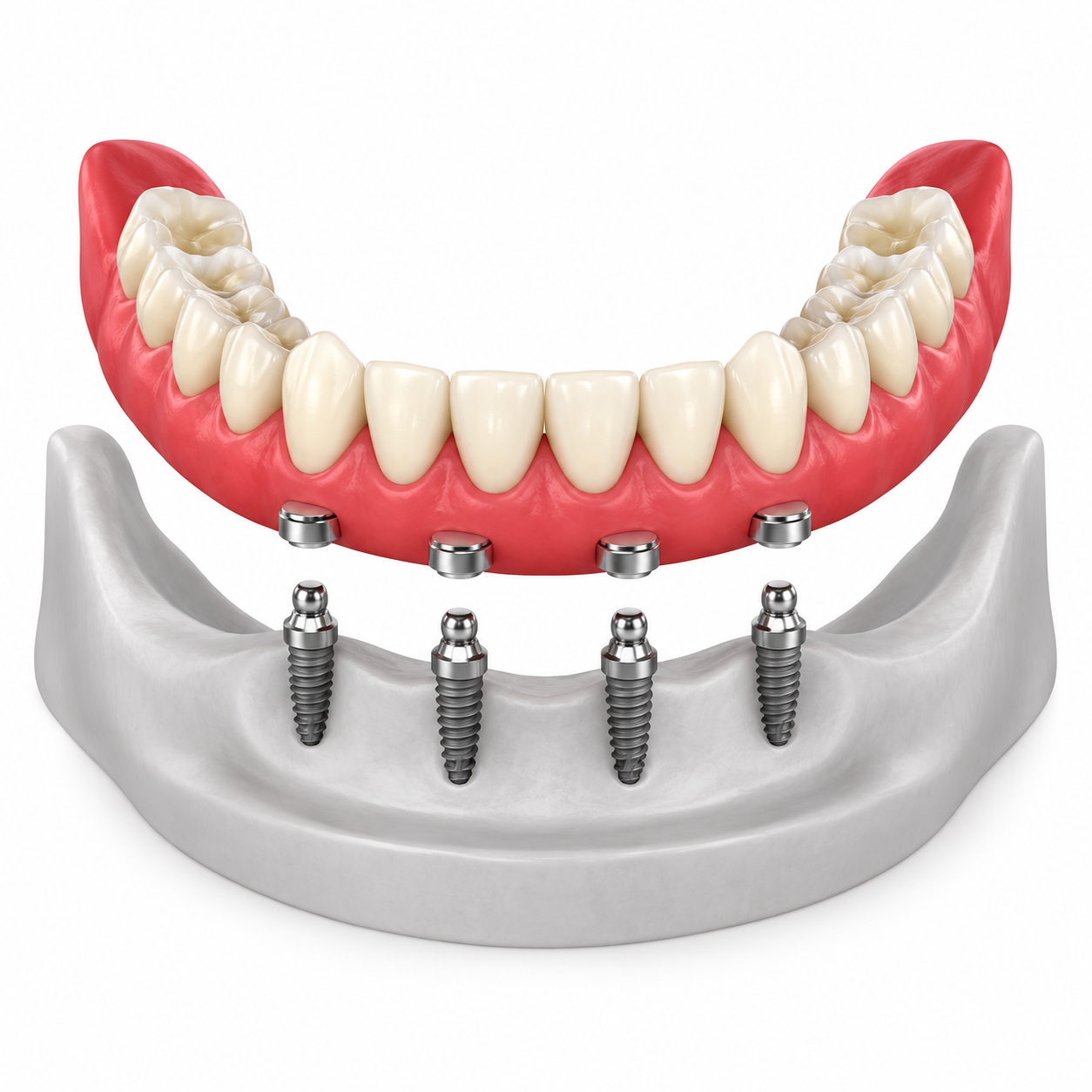
An implant-retained overdenture is a removable denture that connects to implant attachments while worn. You remove it for cleaning. It is different from a fixed full-arch bridge, which is designed to remain in place and has a different planning process.
Common questions
Not necessarily. Some people may have an option that does not require grafting, while others may need grafting or another plan. Only an individualized clinical evaluation can help determine what is appropriate.
Sometimes an existing denture can be adjusted for attachments; in other cases it may need substantial modification or replacement. Fit, material, bite, and available space all matter.
No implant system can determine candidacy on its own. Bone anatomy, oral health, bite forces, medical factors, and the proposed restoration all need to be evaluated.
An overdenture is removable by the patient for cleaning. It connects to implant attachments for support while worn; it is not the same as a fixed bridge.
We’ll explain why and review appropriate alternatives, which may include grafting, a different implant plan, denture adjustment, or continued conventional denture care.
Advanced imaging at Icónica
Icónica uses Vatech cone-beam computed tomography (CBCT) with CleverOne software to support diagnosis and the planning of surgical and dental implant procedures. When clinically indicated, three-dimensional imaging helps us assess tooth roots, available bone, and nearby structures such as nerves and sinuses.
CleverOne supports image review and visual treatment planning, helping us explain your anatomy and proposed care more clearly. For implant treatment, this information supports assessment of the site and planning of implant position.
Imaging is selected for your individual needs. CBCT is used when the additional three-dimensional information is clinically appropriate; it is not required for every examination or procedure.
Icónica Dental Group · Hallandale Beach
We’ll review your lower denture and your situation, then explain whether a MegaGen MiNi™ overdenture evaluation—or another option—makes sense for you.
Product descriptions on this page are attributed to MegaGen. Manufacturer information is not a substitute for a clinical examination and does not guarantee candidacy or results. View the MegaGen MiNi™ catalog ↗