Release restrictive tissue
Movement, symptoms, and coordinated care.

A tight tissue attachment and a bony prominence are different concerns. We identify what is affecting you, explain the options, and plan treatment only when there is a clear reason to intervene.
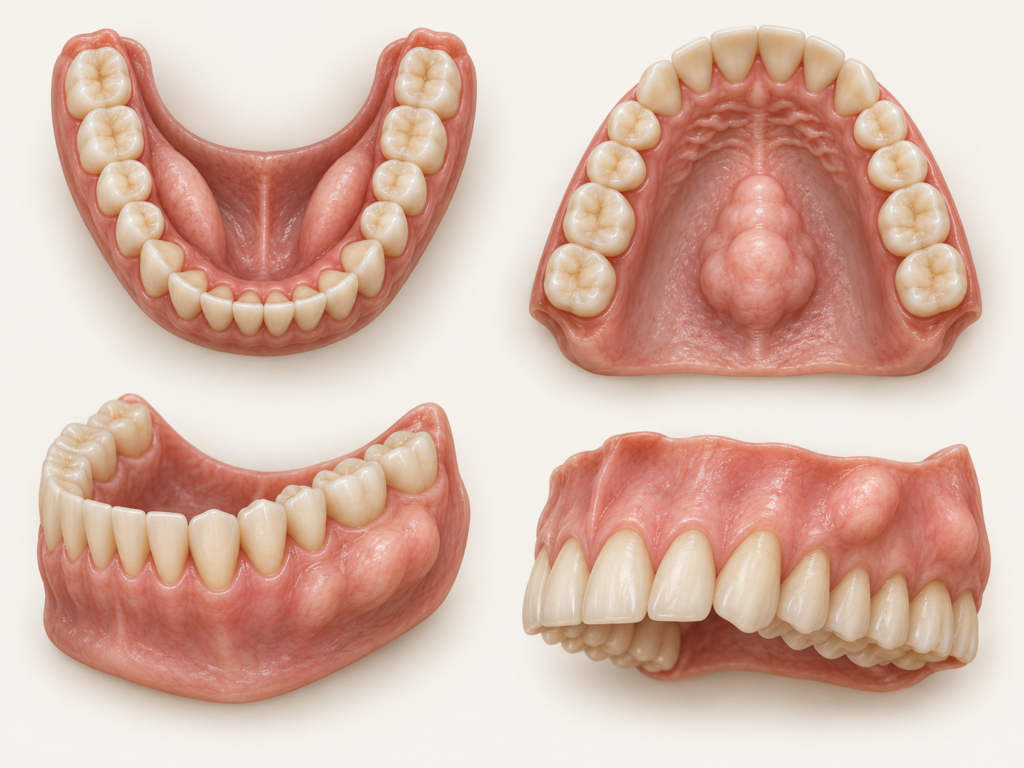
A frenectomy addresses a restrictive band of tissue connecting the lip or tongue. Tori removal addresses benign bony prominences that may interfere with a denture, hygiene, or comfort. The examination considers function and symptoms, not appearance alone.
Movement, symptoms, and coordinated care.
Comfort, access, and restoration fit.
Benefits, alternatives, and individual risks.
Your examination and goals guide which approach is appropriate.
A procedure may be considered when the frenum contributes to a diagnosed functional or treatment-related problem.
Tori may be removed when their size or location interferes with a planned prosthesis or causes other clinically significant concerns.
Not every visible frenum or torus needs surgery. Observation or another treatment may be appropriate.
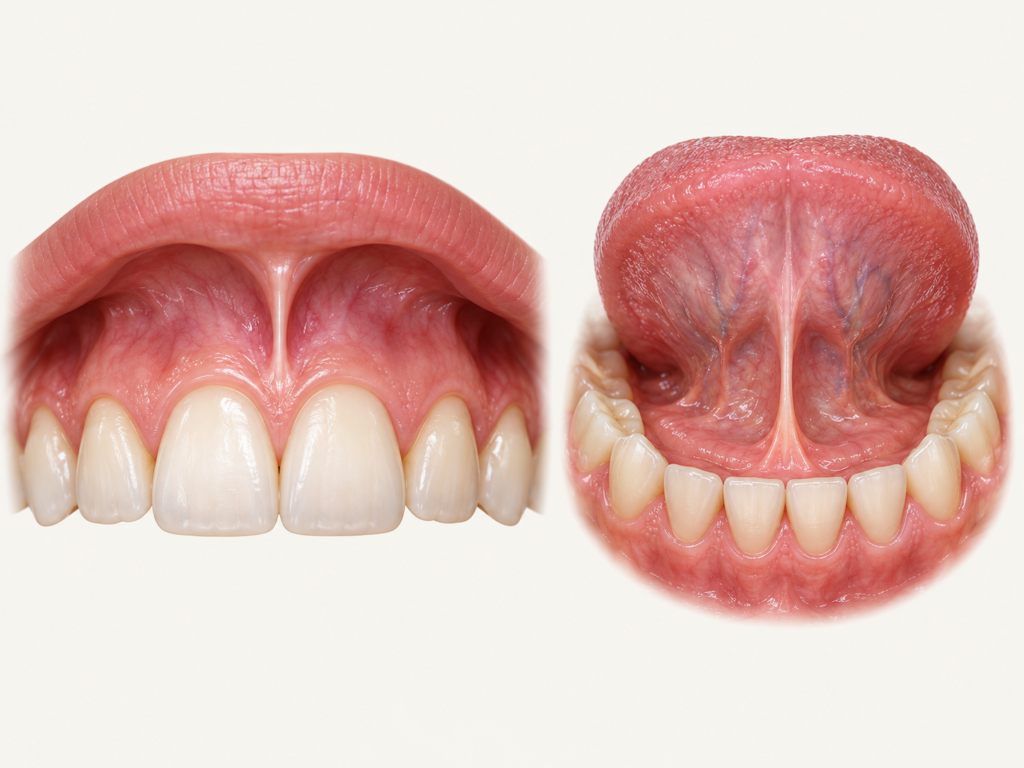
A labial frenum connects the inner lip to the gum tissue; a lingual frenum connects the underside of the tongue to the floor of the mouth. We assess tissue tension, movement, symptoms, and the wider dental plan before recommending a release.
A frenectomy may be considered for a demonstrated functional or periodontal concern. Appearance alone does not establish a need for surgery, and treatment does not automatically close a tooth gap or resolve every speech or feeding concern.
Bony prominences on the tongue side of the lower jaw, often on both sides. We assess whether they interfere with comfort, hygiene, or a planned denture.
A bony prominence near the center of the roof of the mouth. Its size and position can affect clearance for an upper denture or other prosthesis.
Localized bony prominences along the jaw ridge. Evaluation considers tissue irritation, access for cleaning, and the contours needed for restorative care.
Tori and exostoses often require no treatment. Removal is considered when examination identifies a specific problem or a prosthetic need.
Images illustrate general treatment concepts and are not presented as patient results.
Your care begins with a conversation and a clear assessment. We connect the treatment recommendation to your health, comfort, and long-term plan.
Review symptoms, tissue or bone anatomy, and any prosthetic or orthodontic needs.
Discuss monitoring, alternatives, surgical technique, anesthesia, risks, and costs.
The chosen procedure addresses the specific attachment or bony interference.
Attend follow-up and any coordinated orthodontic or functional care when indicated.
Aftercare differs for soft-tissue release and bone removal. Follow your instructions for cleaning, food, activity, and any exercises specifically prescribed for you. Healing and functional outcomes are assessed at follow-up.
Before you begin, we review your health history, medications, treatment alternatives, expected sequence, and costs. Bring your questions so the plan is clear.
Advanced imaging at Icónica
Icónica uses Vatech cone-beam computed tomography (CBCT) with CleverOne software to support diagnosis and the planning of surgical and dental implant procedures. When clinically indicated, three-dimensional imaging helps us assess tooth roots, available bone, and nearby structures such as nerves and sinuses.
CleverOne supports image review and visual treatment planning, helping us explain your anatomy and proposed care more clearly. For implant treatment, this information supports assessment of the site and planning of implant position.
Imaging is selected for your individual needs. CBCT is used when the additional three-dimensional information is clinically appropriate; it is not required for every examination or procedure.
Learn about frenectomy & tori removal, planning, care, and payment.
It is a band of tissue that connects the lip to the gum or the tongue to the floor of the mouth. Its significance depends on function and symptoms.
No. Examination of function and the wider clinical situation is needed before recommending surgery.
Not necessarily. Gap closure may require orthodontic or restorative treatment. Timing is coordinated with that plan.
Tori are benign bony prominences, commonly on the palate or the inner side of the lower jaw. Any new or changing lump should be examined.
No. They are often monitored unless they interfere with a prosthesis, hygiene, comfort, or another treatment need.
No. Frenectomy treats soft tissue; tori removal reshapes or removes selected bone. Their techniques and recovery differ.
The technique is selected for the tissue and clinical situation. The method proposed for you is explained during planning.
Healing depends on the procedure, area, and individual factors. You receive case-specific instructions and review dates.
Possible risks include bleeding, infection, discomfort, scarring, tissue reattachment, and injury to nearby structures. Functional improvement varies and is not guaranteed.
Your estimate depends on the findings, procedure or restoration, complexity, and additional care. We review the planned fees and inclusions before you proceed.
Coverage depends on your plan and the reason for treatment. Cosmetic services may not be covered. Our team can help review benefits and the estimated patient portion; an estimate does not guarantee insurer payment.
Icónica offers access to Cherry, Sunbit, and CareCredit. Approval, rates, offers, and repayment terms vary by provider and applicant.
Visit Icónica Dental Group in Hallandale Beach to explore frenectomy & tori removal with Dr. Christopher Garcia.
Explore Cherry, Sunbit & CareCredit ↗